

Earlier this week, I was excited to share the news that we have awarded the first ever W.E Bradshaw University Innovation Grant to Dr Indranil Basak, at Victoria University in Wellington.
When we visited the shortlisted candidates, I was blown away by the work they are doing. When we visited Dr Shahab Kazemi at the University of Auckland, he and his collaborator Eugene Lee had prepared a presentation on their gastric pacemaker project. I sat there listening, and I found myself feeling quite emotional. Because what they were describing wasn't a hope or a theory - it was a concrete, immediate replacement for animal use in their field. I left that room feeling something I don't always let myself feel in this work: certainty that things are changing. I knew that we had to find a way to fund more than one project in 2026. We need to save as many animals as possible.
With that said, I am absolutely thrilled to share that Pathfinder has provided generous sponsorship to support our runner-up start their animal-free research, with an exceptional $10,000 of funding.
Pathfinder is a leading ethical investment platform in New Zealand. At the heart of everything they do is a commitment to people, the planet, and animals, and reducing animal suffering is something they take seriously, not just as a checkbox, but as a core part of who they are. We have had the pleasure of working alongside Pathfinder for some time now, and honestly, it's just wonderful to be in the company of people who share our values.
We’re incredibly grateful to Pathfinder for investing in our researchers and helping accelerate the future of humane science in Aotearoa. If you'd like to learn more about their ethical investment approach, we encourage you to visit the Pathfinder website.
Meet Our Runner-up:
Dr Shahab Kazem from the University of Auckland.
Project title: Replacing Large Animal Models in Gastric Pacemaker Research: An Integrated In Vitro Testing Platform
Serious stomach disorders like gastroparesis can be life‑changing, causing nausea, vomiting, malnutrition, and ongoing pain, while current treatments often offer limited relief.
Right now, testing new medical devices such as gastric pacemakers relies heavily on animal organs. Dr Kazem’s project is changing this by replacing animal use entirely with a controllable, human‑based stomach model.
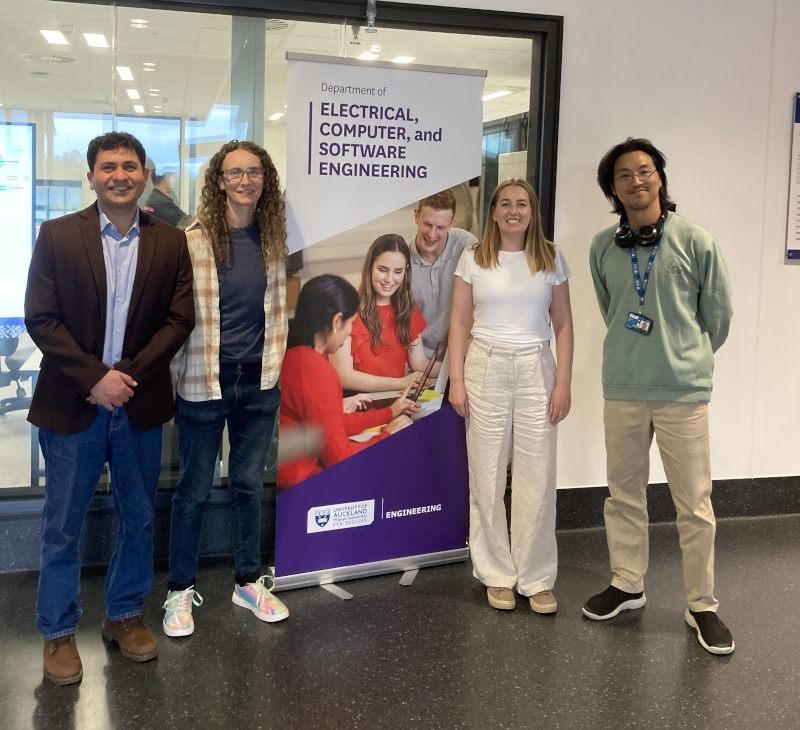
Picture from right to left: Dr Shahab Kazemi (project lead), Dr Marik Kardel (Research Officer, NZAVS), Jade Pengelly (Executive Officer, NZAVS) and Eugene Lee (PhD student)
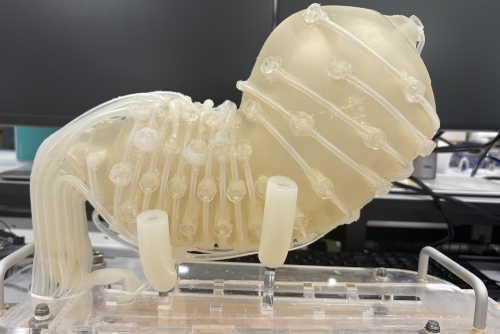
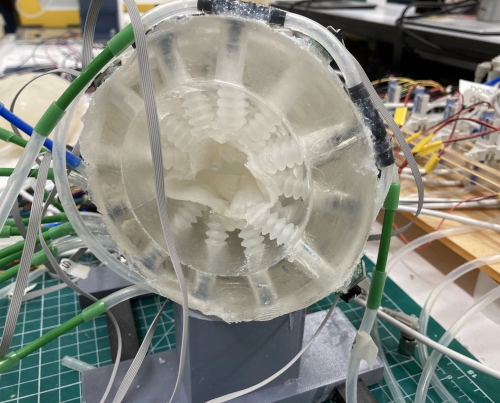
Using a cutting‑edge combination of electrophysiology and a soft robotic stomach, this system replicates real stomach movement to create a highly realistic, human‑relevant simulation of how the stomach functions.
Why This Matters
This flexible model allows researchers to replicate real‑life conditions, enabling safer, faster, and more cost‑effective testing for new devices.
It also eliminates the need for animals and has the potential to replace many studies, while supporting more personalised, human‑relevant treatments.
You can help us fund animal-free research and replace animal experimentation
What's Next...
Next week, we look forward to introducing our research advisory team and highlighting the important role they have played in selecting this year’s Grant recipients.
Thank you for being part of this journey to redefine science in New Zealand.


