

The New Zealand Anti-Vivisection Society was created in the 1970s as a grassroots organisation to end animal experimentation in Aotearoa. NZAVS was founded at a time when the Animal Protection Act 1960 exempted "any research or experimental work carried out on an animal by any bona fide research worker", which left animal experiments without any legal requirements. The institutional Ethics Committee (if they had one) and the researchers' own conscience, were deemed sufficient protection for lab animals by those involved.
Our Founder
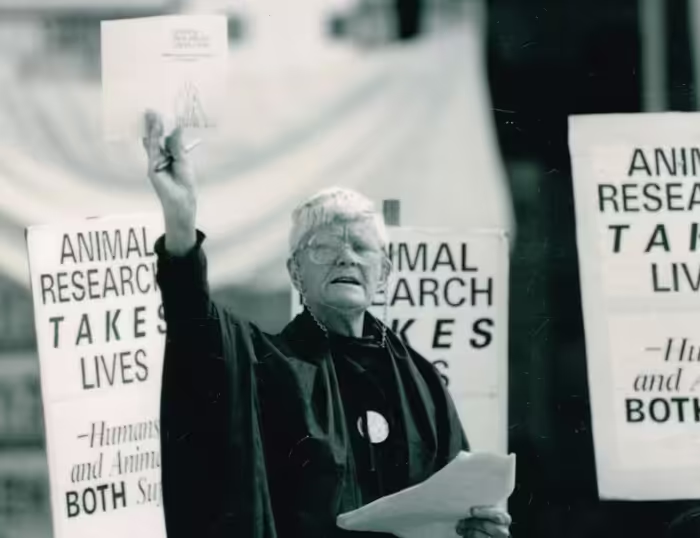
Bette Overell was born in Cheshire, U.K., being the youngest of three children of a railway worker. She went to Lymm School until she had to leave it during wartime to to help repair the fabric of shot-down planes. Then she joined the women's army (ATS), served for five years mostly in Germany, and joined the civil service when she returned to Britain.
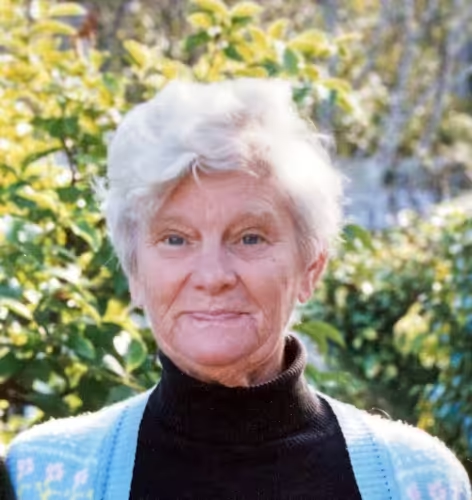
She came to Aotearoa in 1947 at age 25. She lived in Wellington with her husband John, and their home acted as NZAVS headquarters until they retired. She was also the head of the Wellington branch of the British Union for the Abolition of Vivisection. Reportedly, she stopped wearing perfume and make-up when she learned about the animal cruelty involved in their production, later only using proven cruelty-free cosmetic products. John was a builder by trade, who build their multi-level turetted home in Kaiwharawhara. Their two sons both studied music, which she was also very fond of.
Bette founded NZAVS in 1978 after being inspired by the work of Hans Ruesch, a famous Swiss medical historian whose book "Slaughter of the Innocent" brought to light the misleading, dangerous and fraudulent practice of animal experiments. She reached out to several people she thought would join her cause, and in a meeting with eight people, NZAVS was established. By 1980, NZAVS already had more than 300 members.
"When I discovered life was based on cruelty, I couldn't lead an ordinary life any longer."
(Bette quoted in a full-page article in the NZ Times, March 1985)
She also fought against animal cruelty in general, highlighted by one of our earliest newspaper records from March 1979, quoting her fighting against inhumane seal clubbing.
.avif)
She devoted all her time to helping animals. Even in 1979, she called for a Ministry of Animal Regulations and Welfare, because she saw the lack in actual animal protection and oversight. Other concerns revolved around factory farming, and saving whales and seals from being hunted. Motivated by the growing number of international scientists, doctors, veterinarians and societies calling for an end to animal experimentation, Bette soon established a large number of members and supporters determined to make vivisection illegal in NZ.
"You can't say that when all the alternatives are available we'll stop vivisection, because that will just prolong it. We want it stopped now, then the alternatives will follow quicker.
The most important alternative is freely available to everybody - it is an alternative attitude and mentality."
Bette said this in 1980, within a several-page long article in the NZ Listener around Vivisection in general and in New Zealand in particular. The article prompted several response letters, defending animal experimentation (from a scientists) and questioning the vague answers researchers gave the journalist (members of the public).
Even in her 60s, she was part of the Master Swimmers, a health- and enjoyment-based swimming group, exercised daily and followed a vegetarian (mostly vegan) diet.
At age 83, our fierce and incredible founder Bette passed away, on the 11th of August 2007, survived by her husband and sons.
Bette left an invaluable legacy behind, she built the foundations of NZAVS with love and compassion and her work will forever contribute to all future victories of NZAVS. She never settled for small victories and always insisted that nothing but total abolition of animal experimentation will properly protect them. Just regulating the thing would never be good enough. And she believed wholeheartedly that the fight to end animal experiments has a humanitarian side, too, with so many people suffering and dying from side-effects of drugs that passed animal testing.
Rest in power, Bette.
NZAVS historical work
Some of the incredible milestones NZAVS achieved under Bette's leadership and beyond:
1980
Natalie Taylor, active with NZAVS since the founding of the Society, organised the first ever anti-vivisection march in New Zealand. She and Bette addressed a large gathering in Christchurch Cathedral Square. For the following 12 years, NZAVS's marches for World Day for Laboratory Animals (WDLA) were a regular event in Wellington.
This same year, NZAVS made our first petition to Parliament (about 4,000 signatures strong), to call for legislation prohibiting the use of gin-traps in New Zealand (leg-hold traps that have been banned in the UK for decades, but are still in use here with some restrictions today). NZAVS also wove connections to like-minded organisations overseas and
- helped a Canadian society gather data on the use of 1080
- assisted the International Primate Protection League to get an embargo on the export of primates from Indonesia (temporary) and India (permanent)
- helped the International Fund for Animal Welfare (IFAW) to successfully appeal to halt the killing of vicuna in Peru
- collected signatures for the IFAW petition against killing seals in Canada
- helped end the use of the Nobel Collip drum at the University of California (this drum rotates animals to test injuries as they spin and fall on spiked ridges).
1981
NZAVS called children up to 16 to a poster competition, asking them to creatively show their views on vivisection. It received about 70 entries, showing that young people were apalled by the practice and all that it implies. Winning posters were shown in the main winfow of Wellington City Library for WDLA.
The same year, Lincoln College adopted a code of ethics that would govern its use of live animals in experiments to "show that its house is in order".
Tireless work against the notorious LD50 test also ramped up. LD50 is performed by giving test animals a substance in increasing doses, until it kills half the test animals. NZAVS was part of an internationally organised protest against the LD50 test. This was covered by several newspapers.
.avif)
1982
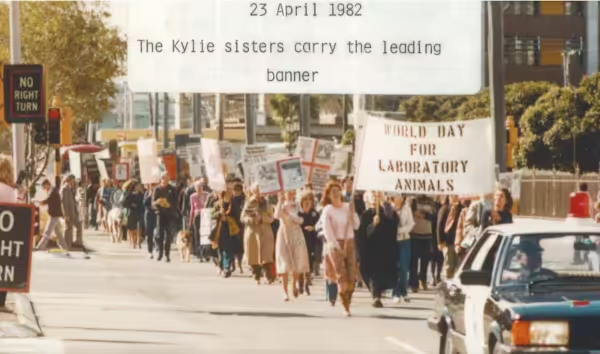
The WDLA march was organised in over 23 countries this year and received a lot of news coverage here in New Zealand (Dominion, Evening Post, Southern News, Kapiti Observer, Listener, NZ Truth). Turnout in Wellington was described as "170 people and three dogs" in the Evening Post.
Outreach around the LD50 test was ramped up further, which was picked up by newspapers, too.
In November, NZAVS organised a fundraising concert, featuring musicians, magicians, and a fire-eater. The aim was to raise 2,000 NZD for the cause.
1983
The call for the New Zealand government to establish an "Alternative Research Centre" appears in a news article in Canterbury University Magazine for the first time, in a large article titled "The Shocking Truth" around the problems of testing household products and drugs on animals. In Contrast, news articles downplayed the number of people attending the march for WDLA that year, reporting it at 37 or 60 people, when in reality there were over 100.
Protests against the proposed Animal Protection Amendment Bill happened in conjunction with SAFE, insisting that the regulation will achieve nothing. We also found the first publicly shared numbers of animals used for science in New Zealand, with the Minister of Health and the Minister of Science and Technology at the time reporting the use of 5,000 live animals that year. Parliament chose to ignore the concerns brought to them by animals rights activists.

NZAVS was also busy internationally, protesting the use of chimpanzees in the U.S. for AIDS research. One of these articles placed the number of NZAVS members at 1,500 people.
1984
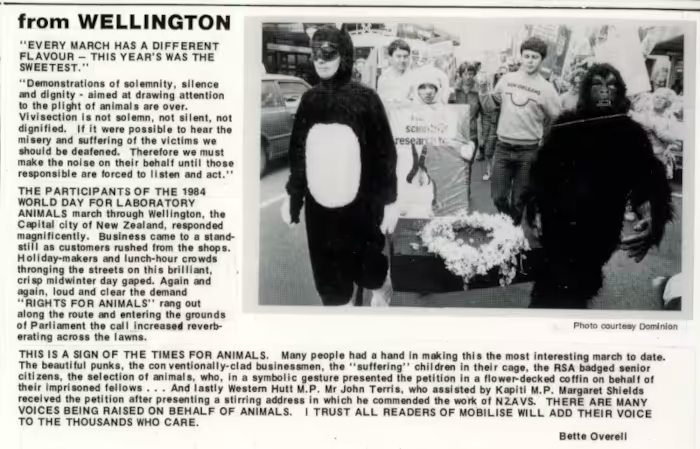
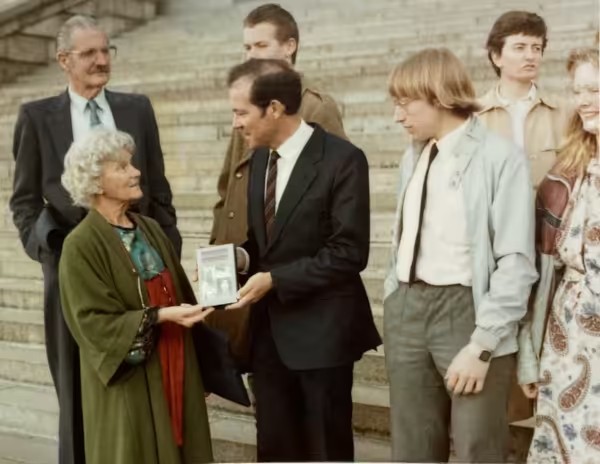
NZAVS presented its petition for abolishing the LD50 test to Parliament, 40,000 signatures strong. The petition was supported by doctors and scientists from around the world. For WDLA that year, 500 animal rights groups in 50 countries coordinated their protests through the Mobilisation for Animals coalition. The march in Wellington was a solemn and silent one, with the petition being presented to MP John Terris in a flower-decked coffin to represent all the animal lives lost to the cruel test. Other marches around the country were also well attended, with more than 200 people marching in Dunedin and 100 in both Nelson and Wellington.
In their election campaigning, Labour promised to ban the LD50 test and sale of cosmetics made from endangered animals that year, as well as increasing the monitoring of animal experimentation. Because of the election, the petition had to be handed over a second time in October, having gained another 3,000 names by then.
Unrelated to NZAVS, fur traders' shops were vandalised with red paint that year. NZAVS members had to reiterate that this had nothing to do with us, as anti-vivisection leaflets had been left at the locations.
Reportedly, NZAVS member numbers had grown to 2,000.
At the end of the year, Bette wrote many letters to City Councils, TV stations and newspapers, opposing the use of bears by the visiting Moscow Circus. While many were sympathetic and showed up to a protest next to the circus on opening-night, the Wellington Council and the Circus refused to recognise any wrong on their part. NZAVS handed out short questionnaires to children visiting the performance, containing questions like:
- Where would a bear feel most content and at home?
- Circus Ring
- With other bears in the wild
- In cages at a Zoo
- Bears' natural mode of travel is?
- Walking on all fours
- Gliding on skates
- Being squashed in cages on the back of a truck moving from town to town
1985
The hearing on the LD50 petition happened in May 1985, resulting in disappointment. Not only did the Committee refuse to count all signatures (they only accepted the 3,000 that had been added since the first handover), it also refused accounts of overseas professionals in support of the petition. The Committee referred the petition back to the government for "favourable consideration". NZAVS attendants got the impression that Committee members had not read the petition, and Bette received several personal derogatory comments.
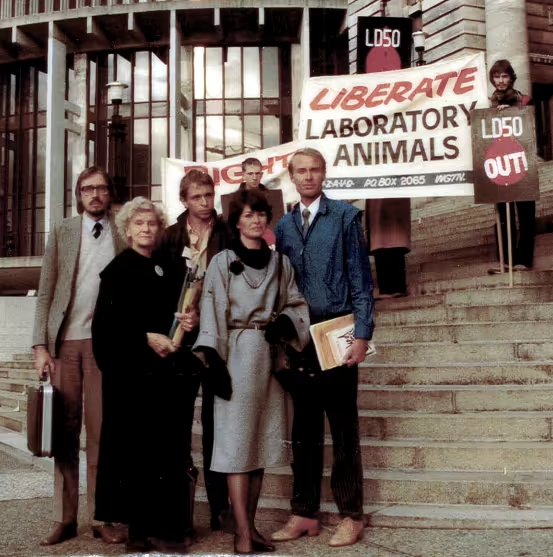
Bette sent letters to newspapers, protesting the poisoning of pigeons near the Wellington High Court buildings and criticising that none of her humane suggestions had been heard. The poisonings had been categorically denied up until then.
Joining pleas of the NZ Veterinary Association and Wellington SPCA, NZAVS spoke out against governmental plans to introduce the myxomatosis virus to New Zealand environment in an attempt to control wild rabbit populations on the South Island.
NZAVS distributed computer software for the simulation of certain animal tests to all NZ medical schools and universities, as well as the Minister of Health, asking them for feedback. The software had been developed at Texas University. The possibilities received hopeful comments from SPCA and Safe Animals. Handing out the software to every institution that used live animals in New Zealand was possible through the generous donations by NZAVS supporters. However, receiving institutions were hesitant, called the software interesting but unfinished and the Minister of Health directly stated the software had “no part to play in the assessment of the safety of new medicines”.
In December, another topic gained attention, when the (apparently in place) ban on live export was lifted, and a shipment of 18,000 sheep was loaded in Timaru to travel to Mexico. Both animal advocacy groups and meatworkers protested the event, with the latter going on a full-on strike for two days.
1986
The march for WDLA was held under the slogan of "Vivisection Kills – Animals and Humans". Ninety-thousand leaflets, outlining examples of drugs that had past animal testing to then cause serious issues and death in humans, were distributed beforehand. Reportedly, “several hundred people” participated in the protest marches (happening in Wellington, Christchurch, Dunedin, and Hawkes Bay).
The video “Hidden Crimes” was screened publicly at several locations for World Animal Day. Bette handed a copy of the video to MP John Terris, to be screened in Parliament. Despite having invited all 95 Ministers, only three attended. In the following month, NZAVS promoted the film to secondary schools and medical training institutes. There was pushback to showing the video to children over 13 even years down the line, but the video kept making rounds in the country.
At this point, NZAVS and SAFE went separate ways, with SAFE supporting the Amendment to the Animal Protection Act proposed by MP Garry Knapp. The Amendment would require animal researchers to submit their use data annually to Parliament via the Minister of Agriculture. Meanwhile, NZAVS opposed the legislation as not good enough. It would not reduce the number of animals used or lower their potential suffering. There was a back and forth in form of letters to a newspaper in November, with SAFE members calling the show of gruesome images to the public “emotional blackmail”, and NZAVS members pushing back. Agreeing on the need to end animal experimentation, the means to that end were not the same.
NZAVS organised a protest of the Knapp Bill on Parliament steps. However, the media attention revolved mainly around the presence of young people identifying with the Punk Scene.
1987
In February, the Animal Protection Regulations were passed in Parliament (which basically mirrored the previous Amendment that lapsed as the sponsor lost his seat in Parliament). While still falling short of what NZAVS advocated for, this legislation meant that institutes needed an ethics committee, overseeing animal experimentation. They also were required to report the number of animals used to the Ministry of Agriculture. The new Act came into effect in September.
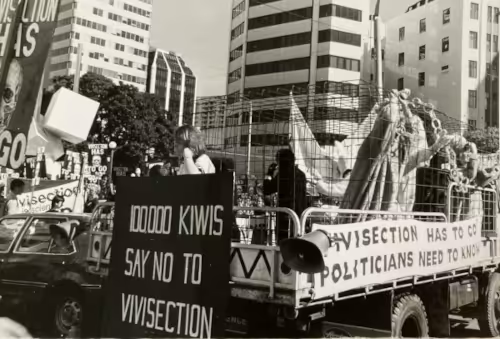
The WDLA march through Wellington stood once again under the banner of “Vivisection Kills” and was attended by 400 people, many of whom were reportedly young people and/or Punks, which Bette noted in a newspaper article. The article itself focussed on the similarities between Punk and the animal rights movement. Not for the first time, voices were portrayed foreseeing that people will start leaving the legal channels if they kept getting shut in their faces.
.avif)
Reports of the Animal Liberation Front (ALF) torching a butcher truck or smashing windows were found a couple of times each year so far, with NZAVS always taking a pacifist stance. A surprising number of newspaper articles revolved around the number of punks at anti-vivisection protests, with several of them writing letters back and taking understandable offense at the accusations of insincerity and that they would just follow the movement because it was “fashionable”.
NZAVS launched its second petition calling for the abolition of vivisection, with intensive work on collecting signatures for over a year.
1989
The petition was presented to Parliament with 100,640 signatures on 24 April for WDLA, along with 700 submissions.
At Parliament, John Terris (Labour MP for Western Hutt) accepted the petition from Bette's hands. Not only did the Chairman of the Parliamentary Select Committee "not have time" to hear the over 50 people who wanted to speak on their submissions. They refused to accept more submissions on top of Bette’s, counting the others as correspondence, and refused a general hearing. Four out of five Committee members saw a hearing as a “waste of public money” as they had heard the petition issue before. The dispute drew attention of several newspapers, as Bette refused to submit until they agreed to a proper hearing with at least 35 others.
1990
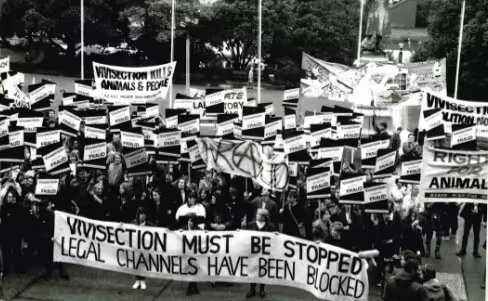
Nothing came of the petition situation apart from more newspaper articles. The protest for WDLA the next year revolved around the slogan "Vivisection must be stopped - Legal channels have been blocked". MP John Terris accepted the protest letter to Minister Geoffrey Palmer that called him out for ignoring the NZAVS petition from the previous year. PM Palmer continued to ignore petitioners.
For the first time this year, exact numbers of animals being used at institutions made their way to the public, and the University of Auckland was called out in the news for the shear amount of over 23,000 animals they had used in 1989.
In September 1990, the controversial booklet "Animal Research Saves Lives" was released, co-published and funded by the Agricultural Chemical and Animal Remedies Manufacturers' Association, the Ministry of Agriculture and Fisheries, the Cancer Society, NZ Heart Foundation, Researched Medicines Industry Association of NZ, and the Medical Research Council. Clearly, they feared the traction that animal rights in general had gained among the public. Coverage in Wanganui Chronicle, while citing the booklet in the "importance" of animal use in research, it also stated: "There is no denying that caring New Zealanders would wish to see fewer animals used in research." Arguments unfolded in letters to newspapers, with both camps claiming the other's arguments to be biased and baseless propaganda.
After almost two years, NZAVS was informed in December that a "course of action" our 1989 petition was being decided.
1991
A similar and spectacular march was held on WDLA, taking their frustration to the street at being told to "go through the proper channels" and then having those channels systematically closed. Though it was filmed, none of it was televised or covered in any newspaper.
Finally, with a diminished 10 speakers instead of the original 50, a Parliamentary hearing took place for submissions on the petition to abolish vivisection in NZ. Twenty minutes into her speech, Bette was told they would have to wrap up by 12:30. Newspapers covered Bette's frustration and repeated the question how a petition representing 5% of the entire New Zealand population was supposed to be laid out in a couple of 10 minute slots, for which many had travelled far.
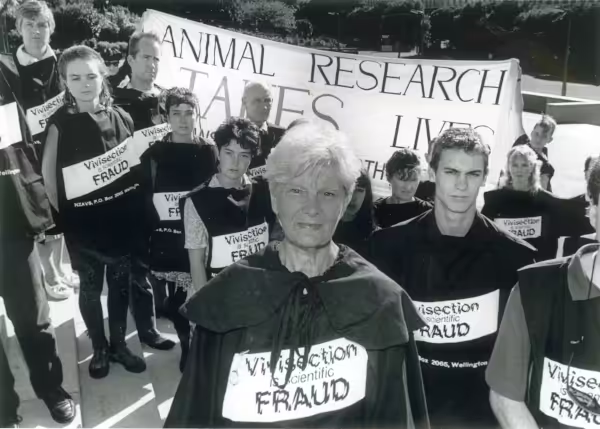
The same year, NZAVS bought hundreds of fish from a Seaquarium that would soon have its power shut off. Several helpers worked from the early morning to get the fish out and release them into the sea. Newspapers called the action well-meaning but naive, as the fish had been captive their whole lives and many were species not accustomed to Wellington sea conditions, and many had washed up dead. Bette refuted those claims, citing the curator's assurance that they were fit for release, a permit from the Ministry of Agriculture and Fisheries and that they had been in fact mostly captured in the wild. The former co-owner of the place wrote to the newspaper to set the record straight. He had asked NZAVS for help, who paid a symbolic one dollar (instead of the reported 1,800), and the only fish who died had been "rescued back" by the begrudged owner, preventing the release with the rest. The begrudged owner was later declared bankrupt, and the co-owner (made interim caretaker) apologised to NZAVS for how his former friend and the press had treated us. Bette expressed sadness that the Council sold the seaquarium with the intent to keep it as is, imprisoning fish again, and suggested a diving school instead.
The government's response to our petition, launched in April 1987, with the hearing finally taking place in April 1991, was disappointing, and together with the "Animal Research Saves Lives" booklet, pushed Bette to start writing her Book "Animal Research Takes Lives - Humans and Animals Both Suffer". We could not find it uploaded anywhere; the governmental archive pages seem to lack the Appendixes to the Journals of the House of Representatives in that decade. So here is our copy:
1987/100 B Overell and 100,640 Others
Subject of the Petition Praying that the House abolish vivisection in New Zealand
Referral to the Government The report of the Primary Production Select Committee on the petition was presented to the House on 25 July 1991 and referred to the Government for consideration.
Decision of the Government The use of animals is necessary for certain teaching (eg surgery), diagnostic and scientific purposes. For example, it would be unethical to trial anew or potentially dangerous therapy on a human patient without having first performed it on an animal subject. In the New Zealand context, research into animal health will occasionally require the use of a live subject. Such research is necessary in the interest of New Zealand’s agricultural exports and the country’s economic well-being.
Alternatives to the use of live animals are sought wherever possible, not only for ethical reasons, but also because animals are inconvenient and expensive to keep. However, although some modern techniques, such as tissue culture, have removed the need for live animals, vivisection will continue to be necessary in some cases. It is not yet possible to simulate the complex interactions that exist in every living animal. Furthermore, specific tests on simplified systems may not detect unexpected side effects of the drug or process under test.
Any institution using animals for diagnostic or teaching purposes must, by law, have a code of ethical conduct approved by the Ministry of Agriculture and Fisheries. Such codes require the institution to set up an animal ethics committee, including representatives of the New Zealand Veterinary Association, the SPCA and a lay person. The committee monitors the use of animals to ensure that such use is absolutely necessary and that procedures have been designed to minimise any suffering to the animals involved.
The New Zealand Anti-Vivisection Society opposes the use of animals for any purpose (including food production) and its views are not those of mainstream New Zealanders. The Society has declined the opportunity to participate in animal ethics committees.
The Government therefore decided that, in light of the above, no further action was required in respect of this petition.
1992
NZAVS launched a national campaign against General Motors, Michigan, which had done crash tests using live pigs instead of human dummies since 1956. Reportedly, animals were hung in cloth slings while pneumatic impactors delivered blows to their head and chest. Several medical professionals stated how scientifically unsound the experiments were. NZAVS organized a spectacular march in Wellington to support people in Michigan, who chained themselves to GM cars on the assembly line. Similar marches were held in other cities (turnout in London, UK, was reported as 10,000 people), all under the slogan "General Motors, General Murderers".
.avif)
(left: Fiona Tait, middle: Bette Overell, right: SimonCottle)
GM Dealer Principal in NZ, Mr. Chave, was presented with a letter to forward to the U.S. headquarters. At a gig in the evening, several bands played in support of the cause (S.M.U.T., Schitzofrantics, Balance, Heathen Filth, Ethiopian Lard Farmers).
Despite television cameras and journalists being present, there were only two mentions of the march for WDLA (one featuring a single person, commenting on their clothes, and one letter by Fiona Tait of NZAVS on the lacking media coverage). Two U.S. newspapers picked up on it, reporting on police congratulating the Wellington demonstrators on "a marvelously organised rally".
In August, NZAVS organised three days of benefit gigs in partnership with Real Groovy Records, featuring bands, rap acts, comedy, food, solo artists and more.
1993
Bette Overell published her book "Animal Research Takes Lives - Humans and Animals Both Suffer". It was her answer to the booklet "Animal Research Saves Lives" that was distributed widely throughout the country by the Ministry of Agriculture and private organisations in 1990. Sample leaflets were handed out during the march for WDLA, and the books were available to buy for 25 NZD.
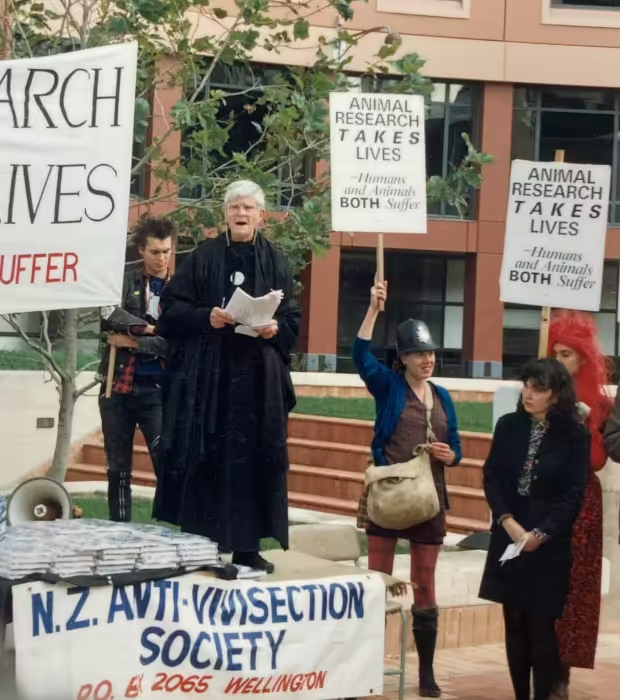
A gig was organised in the evening, featuring Punk bands (Flail, Shrapnel, Prolapse, Swampgoblin, Septic Noise Grinder), proudly standing against earlier accusations that Punks joined the movement insincerely.
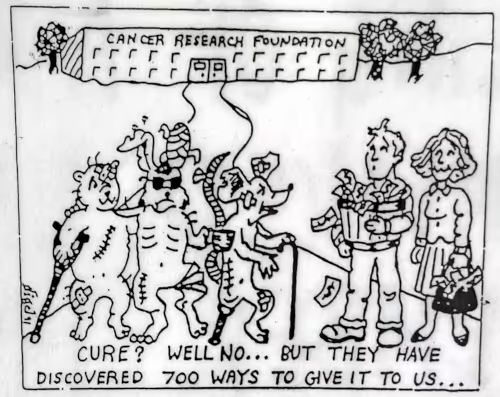
This year, NZAVS's nationwide poster campaign shed light on the amount of animal use in cancer research. The public was not aware of the Cancer Society funding animal research or the scientific problems with it. Alongside Safe, NZAVS distanced itself from vandalism against a Cancer Society van with red paint by the Animal Liberation Front. The considerable amount of news coverage had a considerable conservative tone, defending animal use in cancer research and calling animal rights arguments a "misguided attempt to undermine health research which has almost universal backing". In letters, anti-vivisectionists try to dispel the arguments, portraying that several leukaemia treatments currently in use had been deemed useless based on animal tests, while researchers and offended people suggested that campaigners then surely had to refuse treatment should they get cancer. Reportedly, Daffodil Day raised more money for the Cancer Society than the 1.2 million NZD of the previous year. Anti-vivisectionists pointed out in vain the hypocrisy of having a sausage sizzle to raise money against cancer, when even then there was clear evidence that meat consumption increases cancer risk.
In 1993, the New Zealand arm of the Australian and NZ Council for the Care of Animals in Research and Teaching (ANZCCART) was established, directly trying to discredit Bette's book as anecdotal personal views of the author, with NZAVS supporters pointing out that the body had been formed by members of the animal research industry, who had a vested interest in continuing their practice. The back and forth continued through 1994.
1994
Several letters to publishers were brought to NZAVS's attention to not have been published, among them Hans Ruesch, author of the book that had inspired Bette to get active in the first place.

ANZCCART released a position Statement, pointing out the flaws it perceived with Bette's book. Note here that the book is in fact not perfect and has problematic opinions (for example around vaccination) that would not stand up today, and also that Bette was not a medical professional, yet took the challenge to argue with scientists on their own terf. Still, to reject evidence she presents, simply because the source was old, is shortsighted.
NZAVS protested outside Auckland Zoo in response to the experiments conducted there. During summer, NZAVS provided information, cake and lentil patties at stalls in Taupo.
1995
Having had an art display at the Taupo public library for WDLA. In autumn, Bette announcing that after 17 years, because of insufficient reliable competency to carry out nationwide campaigns, she found herself carrying the entire weight of responsibility of running NZAVS. Noting that the production of "Animal Research Takes Lives" had depleted the Society's financial resources. Nevertheless, she told readers that paying subscriptions and donations would never make up for active involvement.
1996
The year saw articles by the Vegan Society NZ citing Bette on having promoted vegan eating, even in the 1987 petition submission. She also commented on parties' stances regarding animal rights for the upcoming election.
1997
1997 marked the relaunch of NZAVS under new secretary Phil Clayton. Thanks to the generous legacy of Australian artist and NZAVS member Isla Dight, the new headquarters Dight House was purchased in Christchurch. The sad occasion of the passing of Isla Dight had led to the resurgence of NZAVS as a national organisation. The official NZAVS website was put up at the same url you know today. Bette was still onboard in a supporting manner, especially surrounding further distribution of her book. The first Mobilise! newsletter featured a letter from Bette announcing the tentative formation of group supporting imprisoned ALF members with their legal fees.
The Society ran several adverts for Bette's book in newspapers and radio. The Cancer Society Ball was protested peacefully by about 30 members, calling out the use of animals in cancer research and that several attendees of the ball were smoking. One of them reportedly flicked a cigarette at the protesters.
ANZCCART reportedly took over as publisher of "Animal Research Saves Lives" and NZAVS protested the conference under "heavy police presence".
1998
A Charity Auction and Ball by the National Heart Foundation was protested by 15 NZAVS members, pointing to the flaws of using animals in heart research. Regular media releases by NZAVS were not picked up by news outlets.
NZAVS was present with a stall at the 1998 Health for Life Expo, and was one of the sponsors of a whole-day health seminar organised by Patients Rights Advocacy.
1999
The year saw a focus on the connection of animal agriculture and animal experimentation on one hand, and the dangers of genetically modified organisms on the other, opposing Monsanto in particular.
For WDLA, NZAVS ran a benefit night at the Provincial Hotel, resulting in a CD of the "cream of Christchurch and Nelson Hardcore and Punk bands".
ANZCCART was protested again, too, both in light of vivisection in general and use of genetically manipulated organisms.

NZAVS called on supporters and the public to make submissions on the Cancer Society's plans for a review of future needs of cancer research. Alongside making its own submission, NZAVS distributed leaflets informing the public of critical flaws in the animal model and suggested ideas submissions could include.
2000
Fistulated cows at Massey University made the news, with barely a glance at the ethical concerns behind such research.
[Whoever had religiously collected news articles up to this point must have become unavailble in some way, as we see a huge gap in our archive. Thank you for all that work of preserving our history!]
For NZAVS's more recent work, head to Our Work pages. You will notice that our methods changed, the more it became clear that working together with scientists towards our common goals of better science outcomes and less suffering is more fruitful for introducing real change.
We admire the courage of those who trailblazed this movement, and will be forever grateful. Our goals have not changed and, like them, we employ the methods we see as most effective.


